





- EDITIONS:
 Spanish News Today
 Alicante Today
 Andalucia Today

PROPERTY SEARCH

PROPERTY SEARCH
A 35-million-year-old crab fossil found in Mallorca has never been seen before on the Iberian Peninsula
Researchers have identified the remains of a tropical sea creature in Randa that sheds new light on what the Balearic Islands looked like long before they existed
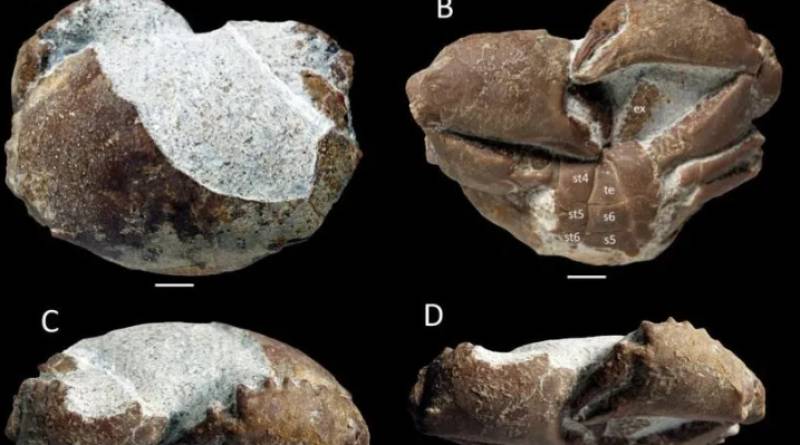 Mallorca has given up another secret from its distant past. Researchers from the Balearic Museum of Natural Sciences have identified fossilised remains of a marine crab in Randa, in the municipality of Algaida, that lived roughly 35 million years ago. It's the first time this particular genus of crab, known as Palaeocarpilius, has ever been documented anywhere on the Iberian Peninsula or in the Balearic Islands.
The find has been published in the Bulletin of the Natural History Society of the Balearic Islands, with the study authored by Àlex Ossó, Josep Juárez-Ruiz and Rafel Matamales-Andreu. The specimen belongs to the species Palaeocarpilius cf. macrochelus, an extinct crab that lived in warm, shallow tropical seas during the Eocene period.
To put that in perspective, 35 million years ago the Balearic Islands as we know them didn't exist. The territory now occupied by Mallorca lay submerged beneath a vast tropical sea, part of the ancient Tethys Ocean, which is considered the forerunner of today's Mediterranean.
Coral reefs, molluscs, sea urchins and countless crustaceans thrived in those waters. The crab now identified was a robust creature, with a wide rounded shell and asymmetrical claws, one significantly larger than the other, almost certainly used for capturing and crushing prey.
Related species had previously been found in Catalonia, Aragon and southeastern Spain, but never in this part of the world. The discovery points to a connection between the marine ecosystems of ancient Mallorca and those of what is now the northern Italian coast, suggesting the fauna of the Eocene Tethys Sea was far more interconnected than previously understood.
The specimen itself reached the museum through a donation from Joan Capellà Galmés, and researchers are keen to highlight just how important that kind of public contribution is to advancing scientific knowledge.
"Each new discovery helps us better understand what the Balearic Islands were like before the current islands existed and what organisms lived there," the authors write. "There is still much to discover, and the sites in Mallorca continue to yield results of great scientific interest."
Given what's already been found, that's not hard to believe.


See more news about animals in Spain:
OR
Sign up for the Spanish News Today Editors Roundup Weekly Bulletin to get a comprehensive email with all the week’s news for Spain, Murcia, Alicante and Andalucía.
Get a sneak peek – here are a few of our recent Subscription Bulletins:
Discount Special Offer subscription:
36.95€ for 48 Editor’s Weekly News Roundup bulletins!
Please CLICK THE BUTTON to subscribe.