







- EDITIONS:
 Spanish News Today
 Alicante Today
 Andalucia Today
Spanish News Today Editors Roundup Weekly Bulletin July 3
TOP STORIES: "Rent out a holiday home in Spain? You NEED to read this…" & "Buying from Temu and Shein just got more expensive with the EU’s new parcel tax"
Both England and Spain have made it through to the Round of 16 in the World Cup, and the competition is hotting up almost as much as the weather is. Both teams face a tough match ahead on Monday, but if all goes well the conditions are right for both to be able to square off against each other in the Final on July 19, in a repeat of the Women’s World Cup Final 2023, or the Men’s Euro Final 2024!
Of course, there’s a long road ahead before that could happen, which gives you plenty of time to think about other things, like if it’s really going to be profitable to own and rent out a holiday home in Spain anymore, or whether it’s really going to be profitable to buy cheap clothes and goods from China anymore…
Thinking of buying a holiday home in Spain?
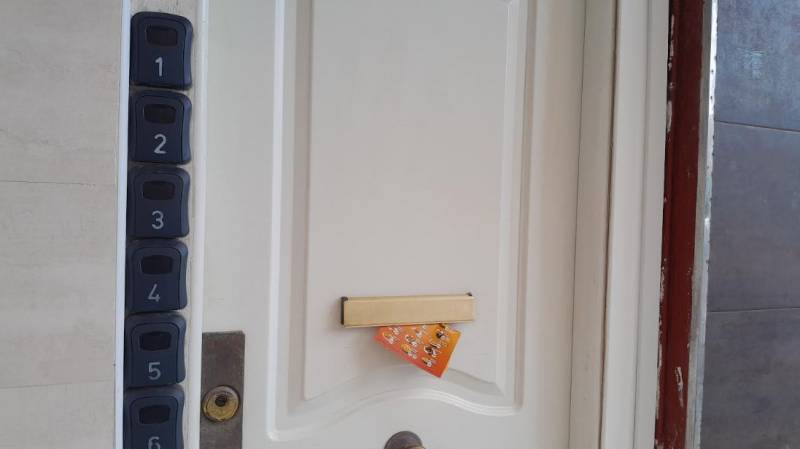
Anyone renting out a Spanish property to tourists for a bit of extra income won’t be too happy with what’s coming out of Madrid this month, because the government’s about to vote on a housing package that includes bumping VAT on tourist apartments up to 21%.
Government spokesperson Elma Saiz confirmed the plan on Monday, describing it as a wide-ranging package designed to bring different political parties on board by including something for everyone. It’s expected to go before the Council of Ministers for approval in the coming weeks, although nothing’s set in stone just yet.
The thinking behind it all is twofold. One half of the package is about getting a grip on the skyrocketing rental prices, with measures like regulating short-term and room rentals, forcing landlords to use written contracts, extending leases and dishing out income tax breaks to anyone willing to lower their rent.
The other half is aimed at freeing up more affordable housing, and that's where holiday let owners come into the picture, since a higher VAT rate on tourist accommodation is being pitched as a way to nudge more properties back into the long-term rental market.
For anyone with a place they let out to holidaymakers, it’s worth remembering this rate would apply specifically to tourist stays rather than standard long-term lets, so the cost of doing business with tourists could be about to climb.
At the same time, there have been renewed calls from the housing spokesperson of political party Sumar, Alberto Ibáñez, to push through a two-year extension on rental contracts, a measure that already fell flat once before back in March when the PP, Vox and Junts teamed up to block it in Congress.
Nothing about this latest package is final. Ministers are still thrashing out the details with parliamentary groups to make sure it’s got enough backing to actually pass, and while July has been mentioned as the target, no exact date has been nailed down.
Anyone with a holiday let would do well to keep half an eye on the news over the summer, since the final rules – and when they’d actually kick in – are still very much up in the air.
Temu or not Temu?
If you’re a fan of a Temu bargain or the occasional Shein haul, this one’s for you. As of Wednesday July 1, the European Union has introduced a new €3 customs fee on parcels worth under €150 ordered from outside the bloc, and yes, that very much includes the cheap Chinese platforms we’ve all come to know and love (or despise with every fibre of our being, as the case may be).
The fee works per product type rather than per parcel, so a package containing a pair of trousers and a cap would attract a €6 charge, but throw in a T-shirt and you’re looking at €9. The good news is that the online platforms are responsible for paying it, though they’re perfectly entitled to pass the cost on through slightly higher prices. What they can’t do is have a courier knock on your door afterwards asking for the money. If that happens, it’s not allowed.

The reason the EU has felt the need to act isn’t hard to understand once you see the numbers. The volume of low-value parcels arriving in Europe has more than quadrupled since 2022, going from 1.3 billion to 5.9 billion in 2025. European customs are now processing 15 million incoming products every single day, with around 93% coming from China, averaging less than €9 in value each. That’s a lot of parcel tape and a lot of extra processing capability needed – which all needs to be paid for somehow.
There are safety concerns behind the move too. EU research found that 60% of online products imported from outside the bloc don’t comply with EU law, with cosmetics and toys among the worst offenders. Last month, Temu was fined €200 million for failing to stop the sale of illegal and dangerous products, which puts the new fee in a slightly different light.
This €3 charge is a temporary measure while the EU works towards a fuller reform due in July 2028, when tariffs based on actual parcel contents will replace the current blanket exemption. An additional handling fee is also expected later this year, though the final amount hasn’t been confirmed yet.
Murcia
Over in Murcia, a man found himself at the centre of an art mystery when he picked up what he thought was a piece of abandoned junk on a Seville street, only to find it was a €150,000 painting by one of Spain’s most celebrated artists tucked under his arm.
Andrés Hurtado, 57, was visiting Seville with his family last weekend when he spotted the small painting propped against a wall and assumed someone had thrown it out.
What Mr Hurtado didn’t know was that the work was by Joaquín Sorolla, the late 19th and early 20th century Spanish master renowned for his luminous beach scenes, and that it belonged to a Seville family who had been taking it on holiday with them for years.
In the chaos of loading the car, they’d accidentally left it leaning against a wall and driven off. By the time they realised and came back for their precious painting, it was gone.
The family put up posters appealing for help locating “a painting of great sentimental value,” carefully leaving out any mention of Sorolla or what it might be worth. They heard nothing until the following Tuesday.
Back home in Murcia, Mr Hurtado had been doing a little digging of his own. Using AI to research the picture, he quickly realised he might be sitting on something rather special. He called an auction house in Madrid and sent them pictures. They came back to me very quickly, saying it was an original Sorolla.
However, his excitement was short-lived when news of the “stolen” painting reached him, along with a photo supplied by the owners, he put two and two together immediately.
“I rang the police straight away and told them the news wasn’t true,” he said. “I told them I hadn’t stolen it but just picked it up in the street.”
The painting has since been returned to its relieved owners, who explained that heavy traffic and impatient drivers had frazzled their nerves on the day.
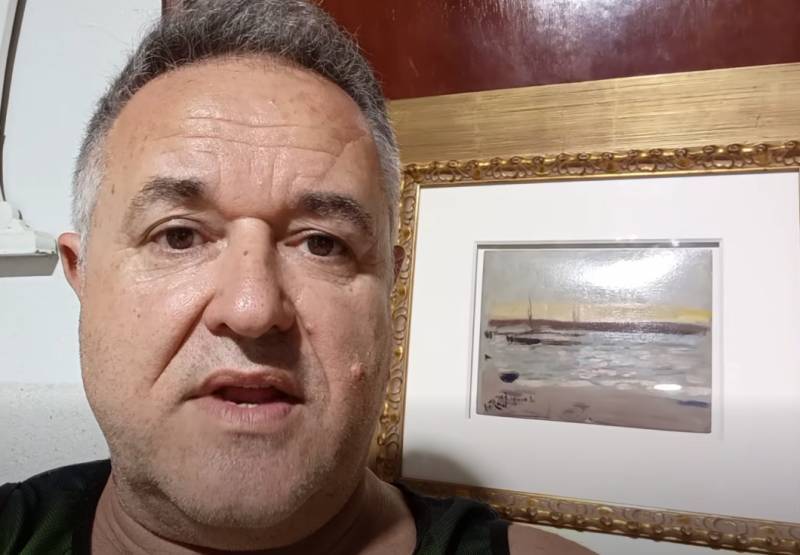
And speaking of frazzled nerves, English teachers across the Region of Murcia may be dreading the return to the classroom, as the decision was made to pull out of the native English assistant programme in schools.
This means around 270 language assistants will no longer be placed in classrooms next academic year. The scheme will continue in 14 other autonomous communities where native speakers are brought into classrooms to support foreign-language learning, mainly English.
As a result, students in Murcia will miss out on a support that, in many classrooms, makes such a difference to speaking practice. The assistants usually spend around 12 hours a week in schools, working alongside teachers and helping students use the language in conversation, rather than just reading or writing it.
They often fill a gap where teachers may have a good level of English but don’t always use it freely in long, natural conversation during lessons.
Murcia’s Education Department has said the decision not to join the programme is linked to legal uncertainty around the role of the assistants, as well as timing issues and concerns about possible financial penalties linked to labour inspections.
The regional government say they are now looking at other ways to use the European funding that was supporting the programme to create different forms of language immersion in schools.
While the programme continues in most of Spain, students in Murcia will no longer benefit from native speaker support that has become a regular part of language learning in many classrooms.
While we’re on the subject of decisions that continue to cause headaches, the B word has reared its ugly head once again as new figures reveal the lasting impact Brexit continues to have on Murcia's agricultural sector 10 years on.
Total fruit and vegetable exports from the region to the United Kingdom have fallen by 26% in volume since 2021, the first full year after the UK effectively left the EU single market.
Fernando Gómez, Director General of Proexport, describes a “gradual and widespread decline” across all Murcian products, with some categories hit particularly hard. “Our biggest concern is that, since Brexit, British importers and supermarkets are increasingly turning to non-EU suppliers,” Gómez says. “Products from Morocco, Turkey and Egypt are gaining shelf space at our expense.”
Part of the problem is administrative. Since 2021, most fresh fruit and vegetables require a customs declaration and certificate of conformity to enter the UK market, adding cost and complexity at both ends of the supply chain. Logistics has become more complicated and expensive too.
The national picture is less severe but still instructive. Across Spain as a whole, fruit and vegetable exports to the UK have fallen 16.6% in volume since 2016, though their value has risen by nearly 30%. With Brexit’s tenth anniversary approaching and rivals continuing to gain ground, that warning is getting harder to ignore.
Meanwhile in Camposol, a new expert report has become the latest twist in the investigation into the deaths of two men whose bodies were discovered buried at a property on the urbanisation last year.
The report, commissioned as part of the ongoing criminal investigation, concludes that there is no digital evidence placing one of the suspects, Bayron AS, at the Camposol villa during the period when the two victims are believed to have disappeared.
 The case centres on the deaths of Ecuadorian nationals José Patricio Chango and Edwin Guillermo Cambal, who vanished in April 2025. Their disappearance triggered a major Guardia Civil investigation that later led officers to a property on Camposol, where the two bodies were eventually discovered buried.
Several people were subsequently arrested as investigators attempted to piece together what happened in the days leading up to the men’s deaths.
Bayron AS has been in pre-trial detention since November 2025 and is one of the individuals facing accusations linked to the case. However, his defence team now argues that newly analysed mobile phone data significantly weakens the evidence against him.
According to court documents, the expert report was prepared using information extracted by the Guardia Civil's Technological Crime Unit (EDITE) from mobile phones seized during the investigation. The analysis reportedly found no evidence that any of the devices were present on Camposol on the night of April 16-17, 2025, when the victims are believed to have disappeared.
The specialists also say they found no evidence of communication between Bayron and Carlos Andrés AM, another suspect in the case who investigators have previously identified as a key figure in their inquiry.
Investigators examining the phones also reportedly found no suspicious internet searches, no evidence of attempts to delete large amounts of data and no searches relating to homicides, disappearances or the Camposol urbanisation itself.
Based on these findings, Bayron’s lawyer, Eduardo Romera, filed a request with the Court of Instruction Number 2 in Totana seeking his client's provisional release. However, the application was rejected by the investigating judge on June 3.
In the ruling, the judge maintained that there are still sufficient indications of possible criminal involvement to justify continued pre-trial detention while the investigation remains ongoing. For now, the case remains in the investigative phase and no trial date has been announced.
And while investigators continue their work in Camposol, scientists studying the Mar Menor have been uncovering concerns of a very different kind. A study by the Spanish Institute of Oceanography (IEO-CSIC) has found microplastics in blue crabs living in the Mar Menor, raising concerns about both environmental pollution and the potential risks linked to their consumption.
Researchers examined multiple samples of the invasive species and found that 100% contained tiny plastic particles, including fibres and fragments from common plastics. The study was carried out to better understand the extent of this contamination in the Mar Menor.
Experts say the presence of microplastics in muscle tissue, the part that is typically eaten, could affect product quality and may expose people to these contaminants.
The findings show how far microplastic pollution has spread through marine environments. Finding it in a crab that is already being fished and eaten raises questions not just about ecosystem health, but also about possible exposure further up the food chain and what that could mean for people who consume it.
And finally, after a week of politics, police investigations and environmental concerns, we’ll finish this week’s roundup with an opportunity rather than a problem!
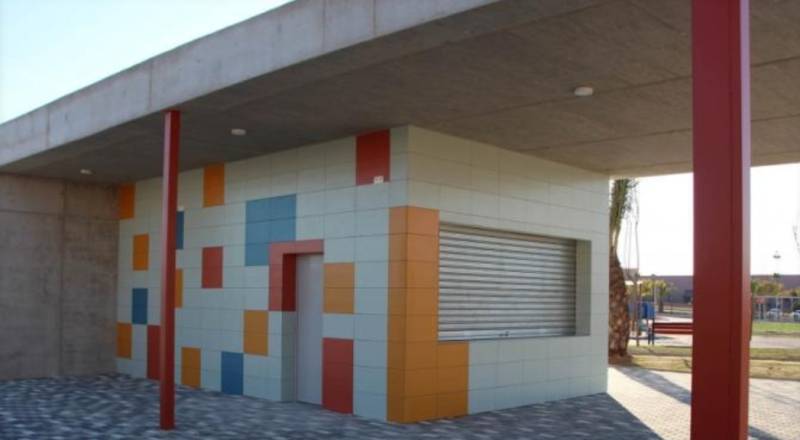 Alhama de Murcia is on the hunt for hospitality entrepreneurs to take over two municipal kiosks, with the council now accepting bids for both spaces. Anyone interested has until July 22 to register their proposal through the Public Sector Procurement Platform.
The El Palmeral kiosk is reopening after its previous operator stepped down, while the Condado de Alhama site will be used for the first time since it was built.
The Condado de Alhama kiosk sits in a prime spot between the La Isla and Condado urbanisations, surrounded by sports courts, a children’s playground and a fitness area. The El Palmeral kiosk, meanwhile, sits in one of the town’s most popular parks.
Bids must be submitted electronically and each concession will run for two years initially, with the option to extend annually by mutual agreement up to a maximum of four years.
The start of summer also means the start of festival season, and Murcia has its own selection of small music festivals with a great atmosphere. This weekend, there’s a free open-air rock concert in Lorca on Friday night by rough-and-ready local young band Outcrack, while Águilas is hosting Conga Festival on across Friday and Saturday with DJs and electronic music. This weekend is also when Cartagena’s Rock Imperium festival is taking place, featuring legends like Iron Maiden and Anthrax.
See more events coming up around the Region by using our EVENTS DIARY:
Spain
Anyone who tried to catch a train in Spain on Monday will have had a real headache to deal with, after the Railway Union staged a 24-hour strike that saw 320 services axed across the Renfe network.
The disruption hit every type of service you care to mention. High-speed and long-distance trains ran at just 73% of their normal timetable, with 98 of the 360 scheduled AVE and long-distance journeys pulled entirely.
Medium-distance trains fared worse, running at 65%, while commuter services bore the brunt of it all, dropping to just 50% outside peak hours.
Anyone travelling during the busier windows of 6am to 9am, 1.30pm to 4pm or 6.30pm to 8.30pm at least had a bit more luck, with services running at 75% across those times in Madrid, Asturias, Cantabria, Galicia, Castilla y León, Seville, Cádiz, Málaga, Valencia, Alicante, Murcia and Zaragoza.
For those travelling between Alicante and Madrid specifically, around five trains in each direction were cancelled on top of the nine guaranteed as minimum services, leaving a fair few passengers scrambling for alternatives.
Renfe did offer free changes and cancellations for anyone affected, but with the summer holiday exodus already underway, the timing couldn’t have been worse, and the Ministry of Transport openly admitted the disruption was particularly badly timed.
Unfortunately, it’s not nearly over either as the union has already confirmed a second strike day for Tuesday July 15, which lands right in the thick of peak holiday season.
As if commuters didn’t have enough to deal with, fuel prices have also shot way up this week. The government’s VAT relief on petrol and diesel ended on June 30, which we all knew was coming. What we didn’t expect was a new discount of sorts that’s designed to ease the blow a little bit.
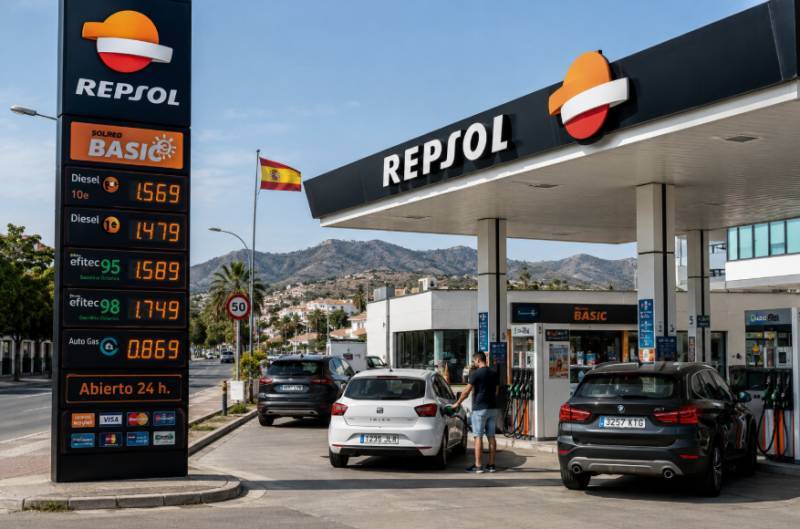
Basically, from July 1, drivers will get 15 cents off per litre. This will drop to 10 cents in August and 5 cents in September, before the support disappears completely at the end of that month, unless something changes in the meantime.
Without any relief at all, the Spanish Confederation of Service Station Owners reckoned prices could have jumped by between 22 and 29 cents a litre, pushing petrol and diesel to just above €1.70 and adding somewhere between €11 and €14 to the cost of filling up a 50-litre tank.
With the new taper in place, petrol should only rise by around 14 cents rather than 29, and diesel by roughly 7 cents instead of 22, so it’s not quite the shock to the system it could have been. There’s even a safeguard built in allowing the government to bring back stronger support if tensions in the Middle East flare up again and send oil prices climbing.
And believe it or not, the government has actually got something else right as well. In an unusual show of perfect timing, on the very same day fuel prices started creeping up, they announced plans to make bus travel considerably cheaper, with a major overhaul of the national road passenger network set to cut fares by an average of 22%.
The new pricing works out at around €0.06715 per passenger per kilometre, and the shake-up will eventually cover 1,682 municipalities and around 30 million people, using newer, less polluting buses along the way.
For people in the Murcia and Alicante areas, a few of the routes worth keeping an eye on include Valencia to Alicante and Murcia, Murcia to Almería, and Madrid to Albacete and on to Alicante, all currently out for public consultation.
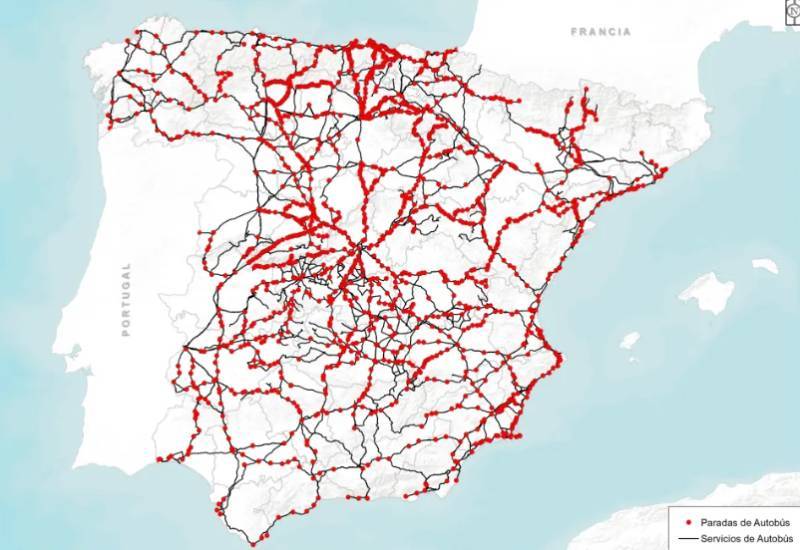
The plan is open for feedback for 30 days, with final approval expected before the end of the year, so while it won’t help with today’s fuel prices, it might make getting around a fair bit cheaper before too long.
Alicante
Now, it wouldn’t be an Alicante section of our weekly roundup without some foreign nationals hiding out in the province being arrested. The latest such arrest took place in Orihuela Costa during an international police operation when police officers detained a Russian fugitive wanted in connection with an alleged multimillion-euro fraud involving the fictitious buying and selling of oil.
 Russian authorities accuse the man of creating a network of companies that defrauded more than 2.6 billion rubles (around €26 million) before laundering the proceeds through associated businesses. He was reportedly sentenced to 10 years in prison in Russia but fled the country before beginning his sentence.
The arrest followed intelligence suggesting he had taken refuge on the Costa Blanca. Acting on an international arrest warrant, later backed by a European Arrest Warrant, officers traced him to Orihuela Costa and carried out a targeted operation to detain him. He has since been placed at the disposal of Spain’s National Court, which will oversee the extradition process. Police said the operation demonstrated the importance of international cooperation in tracking down fugitives hiding abroad.
Meanwhile, Torrevieja has taken another step towards launching its long-awaited new municipal bus service by approving the fare structure that will apply once the network comes into operation.
The standard single fare will be €1.35, while regular passengers will benefit from discounted multi-trip passes offering journeys from €0.90 each. A reduced-price pass costing just €0.65 per trip will be available to under-26s, members of large families and long-term unemployed residents who meet the eligibility requirements.
The new system also introduces a 30-day unlimited travel pass for €38 and tourist travel cards offering unlimited journeys for three or seven days. One of the most significant measures is the introduction of a Gold Pass, allowing registered residents over 65, qualifying pensioners and people with disabilities to travel free of charge, provided they have been registered in Torrevieja for at least one year.
The new bus network is expected to provide improved routes, greater frequency and better links between the town centre, La Mata, hospitals, schools and shopping areas. Much of the fleet will also consist of hybrid and electric buses. The fare ordinance will now undergo a public consultation period before taking effect when the new service is officially launched.
Elsewhere in the Vega Baja, emergency services successfully rescued an English-speaking driver who became stranded after getting lost in a citrus grove in San Miguel de Salinas.
The woman contacted emergency services on the afternoon of June 27 after becoming disorientated while driving through the rural Los Alcores area. Communication difficulties and imprecise location data complicated the search, prompting Local Police and the Guardia Civil to deploy a police drone to scan tracks and farmland.
After around two hours, officers located the vehicle and confirmed that the driver was unharmed, bringing the search to a safe conclusion.
Andalucía
Tragedy struck on the Costa del Sol in the early hours of June 28 when three young Irish nationals lost their lives in a serious road accident on the A-7 motorway near Málaga.
The crash happened at around 2.30am when two vehicles collided, causing one of them to leave the carriageway and plunge down an embankment. Emergency services, including firefighters and police, rushed to the scene but were unable to save two women and one man, who were pronounced dead. A fourth Irish national, a man, suffered serious injuries and was taken to hospital.
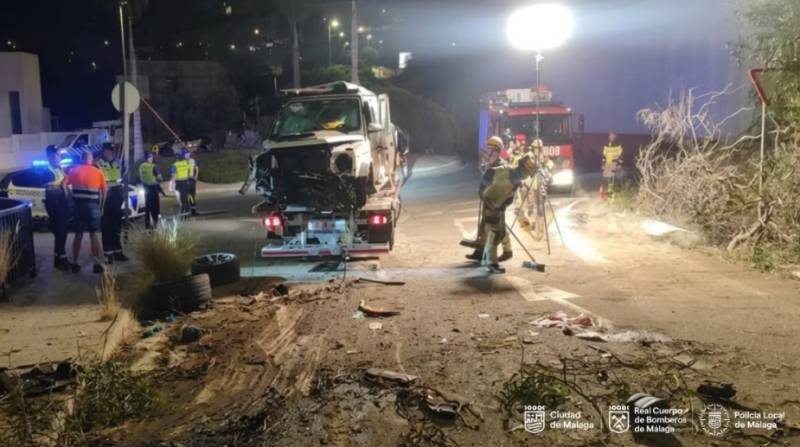
The four are believed to have been from Mullingar in County Westmeath and had only recently travelled to Spain for a holiday. Ireland’s Department of Foreign Affairs confirmed it is providing consular assistance to the families. Fianna Fáil TD Robert Troy, who knows one of the families personally, described the incident as “absolutely devastating”, saying they had only arrived in Spain days earlier and that the news had left relatives heartbroken.
In Seville province, an 84-year-old man has finally won legal recognition of his biological father after pursuing the case for more than a decade and waiting a lifetime for answers.
José Luis Malagón was officially recognised by a court in Morón de la Frontera as the son of a businessman who died in 1963. The ruling was made possible after DNA testing was carried out on remains exhumed from a cemetery in 2023.
According to the case, Malagón’s mother was abandoned after becoming pregnant and he grew up never knowing his father. The breakthrough came after a chance conversation led to written testimony confirming the relationship, allowing legal proceedings to begin in 2013. The case was complicated by uncertainty over the location of the correct burial site, requiring multiple exhumations before suitable DNA samples were obtained.
Although the paternity ruling ends one chapter, it does not automatically entitle Malagón to an inheritance. Under Spanish law, any claim relating to his father’s estate must now be pursued separately, potentially through further negotiations or legal action.
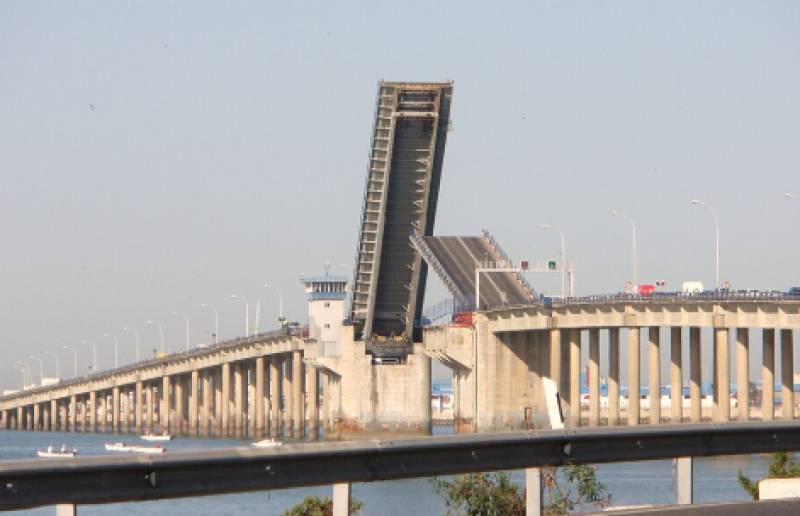
Meanwhile, one of Cádiz's best-known landmarks is set to receive a new name as part of Spain’s efforts to remove public tributes associated with the Franco dictatorship.
The Ministry of Transport and Sustainable Mobility has announced that the José León de Carranza bridge will be renamed after the celebrated poet and playwright Rafael Alberti. The change complies with Spain’s Democratic Memory Law, which requires the removal of honours dedicated to figures linked to the Franco regime.
León de Carranza served as Cádiz’s Francoist mayor for more than two decades and was involved in the 1936 military coup. Alberti, by contrast, became one of Spain’s most influential literary figures, spending years in exile after the Civil War before returning following the end of the dictatorship.
While the bridge’s name will change, the structure itself will remain the same. The 1.4-kilometre crossing continues to be one of the city’s main transport links, and is an instantly recognisable landmark for anyone who knows the area.
You may have missed…
- Expat living abroad? Here’s why a UK lasting power of attorney still matters.
For many British expatriates, estate planning begins and ends with preparing a Will. While a Will is undoubtedly essential, it only takes effect after death. One of the most overlooked, but equally important, legal documents is a UK Lasting Power of Attorney (LPA). - Spain records its deadliest June for drownings since records began.
With 86 deaths in a single month and summer barely started, experts are urging families to take water safety far more seriously. - Why almost nobody working from home in Spain takes a sick day anymore.
A new survey has found two thirds of remote workers in Spain carry on working even when they’re ill. - Mallorca sunbed wars escalate following British tourist’s viral itching powder prank.
After spotting rows of empty sunbeds reserved with towels from dawn, one holidaymaker decided to take matters into his own hands, dividing opinion online! - June 2026 was Spain’s deadliest month for heat in recorded history, with more than 1,000 lives lost.
The figures published this week make uncomfortable reading, particularly for anyone who lived through last month’s heat. More than 1,000 people in Spain died as a result of extreme temperatures in June, the highest total ever recorded for that month since official monitoring began.
That’s it for this week. Thank you for reading, have a lovely weekend, and we’ll be back for more next Friday.
See ya!