







- EDITIONS:
 Spanish News Today
 Alicante Today
 Andalucia Today
Spanish News Today Editors Roundup Weekly Bulletin June 19

TOP STORIES: "Major win for flyers as EU backs passenger rights over airlines" & "Spain’s enduring love-hate relationship with tourism"
You know it’s the start of summer when the World Cup kicks off! Unfortunately, Spain have got off to a pretty bad start in their group, drawing 0-0 against Cabo Verde, but they have a chance to remedy that when they play Saudi Arabia this Sunday, June 21… which also happens to be the summer solstice – the longest day of the year and the start of the summer season!
So, in the spirit of all things summer, it only makes sense to talk this week about – you guessed it – flights and tourism! Make sure your seatbelts are fastened, your seat back is upright and your tray table is stowed, as we’re getting ready for take-off!
Passengers push back against the airlines…
Air travel rules across the EU have been back in the spotlight this week and for anyone flying in and out of Spain on the regular, it’s one of those stories that could end up affecting your wallet without you really noticing until something goes wrong.
At the start of the debate, consumer groups across Europe were warning that proposed changes to compensation rules could leave passengers worse off. Under the current system, delays of more than three hours or short-notice cancellations can trigger payouts of between €250 and €600, depending on distance.
The worry was that this would be watered down, with suggestions on the table that the delay threshold could be pushed up to four or even six hours. That would have meant a large number of passengers losing out on compensation altogether, and there were also concerns about lower payouts and airlines being given more room to avoid liability in “extraordinary circumstances”.
Spain’s CECU and Asufin were among those raising the alarm, arguing that it would tilt the system further in favour of the airlines. But those warnings were aimed at the early draft version of the reforms rather than anything final.
A couple of days later, EU negotiators actually reached an agreement on a broader package of air passenger rights changes, and it shifts the picture quite a bit.
Instead of the focus staying on potential cuts to passenger rights, EU negotiators have now agreed a package of changes that leans more towards tidying up long-standing frustrations for travellers, particularly those flying to and from Spain on budget airlines such as Ryanair where extra charges have become almost routine.
If this whole thing is passed, passengers would be allowed to take a small cabin bag of up to 7kg on board without paying extra, alongside a personal item such as a backpack or handbag, with airlines still able to offer cheaper fares that exclude the larger cabin bag if they choose. Bad news for Michael O’Leary!

The idea is that the standard ticket becomes more transparent, so people can see from the start of the booking process what they are actually getting instead of being hit with add-ons later.
In fact, pricing clarity is one of the other main changes, with airlines and booking platforms expected to spell out what is included in each fare more clearly, which is something many travellers will probably recognise as an ongoing frustration, especially on short-haul routes where the final price often looks very different to the advertised fare.
Existing protections around delays, cancellations and denied boarding remain in place, with compensation still based on flight distance and assistance such as food, drinks and hotel stays kicking in after set waiting times when passengers are stuck for long periods.
There is also a push to make the claims process less painful, with airlines expected to explain how to claim within a few days of disruption and passengers given up to nine months to submit a request.
Nothing here is fully final yet, with the agreement still needing formal approval from both the European Parliament and EU member states.
…while residents push back against the tourists
Away from Brussels, the conversation around tourism itself is taking on a slightly different tone and Spain is right at the centre of it again.
A new Europe-wide study looking at attitudes towards tourism has placed Spain at the top of the list for countries where opposition to mass tourism is strongest, ahead of Italy and France, suggesting that while tourism continues to bring in huge amounts of income for the country, it’s also generating growing frustration in some of the places that experience the highest visitor numbers.
No surprises there. Overcrowding during peak season, rising rental costs and pressure on local services were all flagged as key drivers behind that sentiment, particularly in coastal areas and major cities where summer crowds can feel overwhelming.
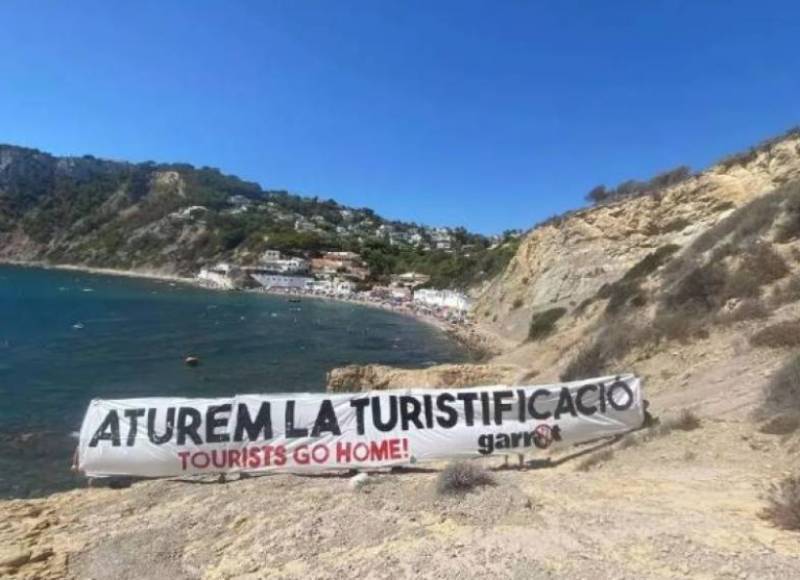
The findings point to a familiar tension in Spain right now, one which has been growing for several years, as anyone who has been following the anti-tourism riots and the housing crisis will already know.
That tensions basically revolves around a situation where everyone knows tourism is still essential to the Spanish economy but where it is becoming increasingly difficult to manage the influx and sustainability of tourist visit at a local level in certain hotspots, such as the Canary Islands, Mallorca, Málaga and others.
In these kinds of places, locals and young people who want to move there year-round to work often find themselves being squeezed out of the housing market as prices rise to meet tourist demand, and because the housing stock is lowered when so many properties are destined for short-term leases to holidaymakers rather than long-term residents.
In places like Gran Canaria, Tenerife and parts of the Balearic Islands, this is having the effect of reducing the number of, say, qualified doctors or teachers who can feasibly move there to work in frontline, key-worker sectors.
Even as the hotel, restaurant and tourist sector is bustling, it has a knock-on effect on other parts of society, and there are places where doctors working in hospitals actually have to sleep rough in tents and makeshift shanties when they’re not on shift.
These are the extreme cases, of course, and many places are already getting ahead of the curve to find ways to live sustainably with the tourists rather than protest against them coming at all. But, as ever with these sorts of issues, it is the extreme cases which receive the most publicity and which most affect public perception of the matter… hence the survey showing that Spaniards at least feel the strongest opposition to tourism.
Italy and France follow closely behind Spain in the ranking, with Greece and Portugal also showing high levels of concern, while countries further north such as Germany and the Netherlands appear generally more relaxed about visitor numbers overall.
At the other end of the scale, Cyprus stands out as the most welcoming destination, reflecting just how dependent it remains on tourism as a key part of its economy, and how it hasn’t reached that point of tourist saturation yet.
Murcia
For Murcia, one of the week's most shocking stories came from La Manga del Mar Menor, where a holiday turned into tragedy after part of a ninth-floor balcony collapsed into a hotel swimming pool.
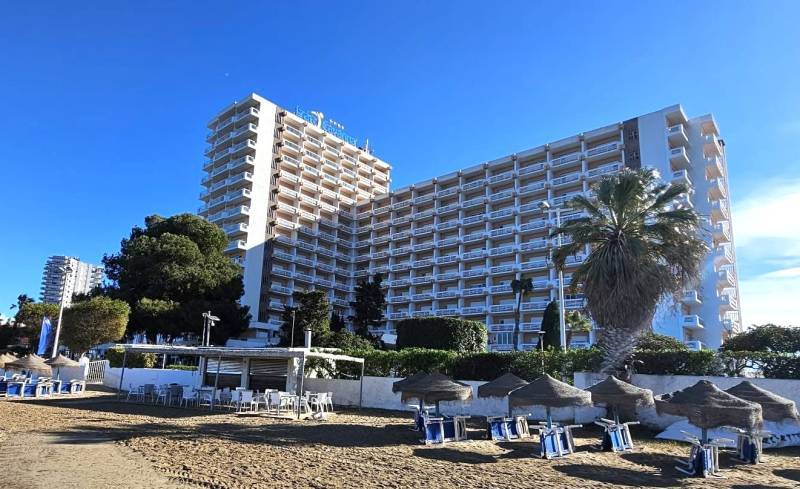 The incident happened at the Hotel Izán Cavanna on June 12, when a section of the balcony gave way and fell into the pool area, striking a man who was in the pool below. Emergency services rushed to the scene and the victim was taken to the hospital in Murcia.
In the days that followed, it was confirmed that the 43-year-old man had suffered catastrophic spinal injuries and had been left paraplegic. He remains under specialist medical care and is expected to continue treatment at Spain's National Spinal Cord Injury Hospital in Toledo.
The collapse has led to investigations by the Guardia Civil and Cartagena City Council, and building safety checks and repairs have been ordered at the hotel. Authorities are now working to establish what caused the balcony to fail and whether there are any wider safety concerns within the building.
Meanwhile, in Santiago de la Ribera, plans were released this week for an €8.3 million transformation of the town's popular seafront promenade.
The project would completely renovate the two-kilometre stretch between Explanada Barnuevo and the Castillitos promenade, with new paving, lighting, landscaping and public spaces to bring the area up to date.
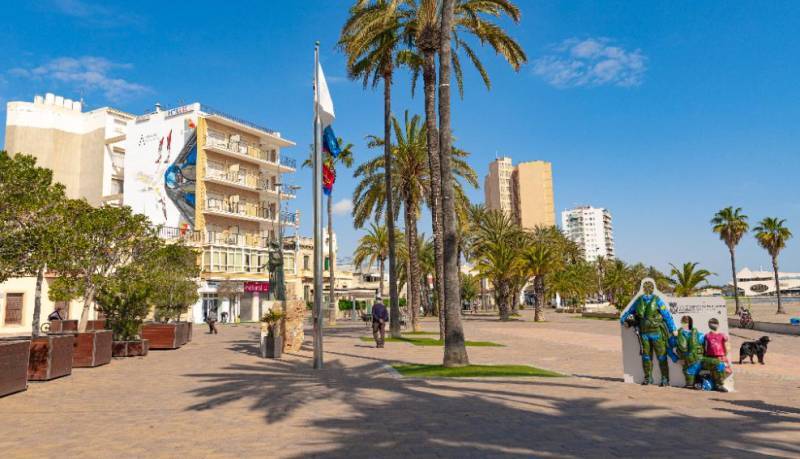
The proposal would also see changes to several beach bars along the seafront. One would be removed and two others relocated to make the promenade more organised and reduce tensions with nearby businesses.
If approved, the project could lead to the reopening of the long-closed Botarata Chiringuito on the Barnuevo esplanade under new management. The plans are currently open to public consultation.
Over in Lorca, archaeological work continues to delay progress on the Region’s high-speed rail project. A year after a late-Roman necropolis was uncovered near the former San Diego station, archaeologists are still carefully excavating the area, with no confirmed completion date for the works.
The dig covers a large section of land within the AVE rail construction zone and sits close to where the underground tunnel for the new line will begin. Around a dozen specialists are working on the site, which dates back to between the 4th and 6th centuries AD.
The discovery is already considered significant, although full details will not be confirmed until the excavation is completed and the final report is submitted.
Work on the rail project will depend on how the excavation progresses, with the Mediterranean Corridor still expected to bring commuter services to Lorca-San Diego station by autumn 2027. Progress has been slowed at various points over the past year due to heavy rain and difficult ground conditions, which have made it harder to remove remains intact.
The cemetery appears to form part of a much larger burial area on the edge of the ancient city, with earlier finds in nearby streets suggesting it may extend further into what is now Lorca's historic centre. At the castle, a separate dig has uncovered a medieval wine press, or lagar, used in the 14th and 15th centuries to produce wine and vinegar. Evidence of olive oil production has also been found at the site.
These two very different digs show just how much history Lorca is sitting on. In the meantime, all eyes remain on the railway line, where the delicate balance between unearthing Lorca’s ancient past and building its high-speed future will keep the AVE works on pause for a while longer.
A dramatic rescue in Murcia had a happy ending this week after a mother dog and her puppy were pulled from an irrigation canal.
The animals were found after a couple heard what sounded like puppies crying near the water. On investigating, they discovered the mother dog with a brick tied around her neck, alongside her puppy, believed to be around three and a half months old.
The couple, Alejandro and Andrea, both off-duty Guardia Civil officers, managed to pull the pair to safety. The Guardia Civil later confirmed the rescue on social media and said an investigation has been opened to identify those responsible.
The dogs have since been taken in by local animal rescuer Martina Díaz, who described the situation as ‘cruel’ and said they were lucky to have been found in time.
Both animals are now receiving veterinary care and will remain in her care while they recover before being put up for adoption. The mother is believed to be around two years old. Martina has also invited the public to suggest names for the dogs and follow their recovery on her Facebook page.
Police have also arrested 11 men this week over the theft of almost three kilometres of copper cable linked to Corvera Airport. The Guardia Civil said the stolen wiring, along with the damage caused and replacement costs, is valued at more than €280,000.
 The investigation began after airport staff reported missing cable from public lighting along access roads to the airport. Officers believe the thefts took place during March and April. Investigators say underground access points were opened along the road network serving the airport, where sections of cable were cut and removed.
Burnt cable, tools and other items were later found near Corvera, which officers believe were linked to the operation. Some of the copper had reportedly been burned to remove insulation before being sold on as scrap metal.
The breakthrough came after officers identified a vehicle seen in the area around the time of the thefts, which was later linked to visits to recycling and waste facilities where the copper is believed to have been sold.
Police say the group was organised, with different members responsible for stealing the cable and others selling it on. The 11 arrests are linked to offences including theft, criminal damage, handling stolen goods and environmental offences. The investigation remains ongoing.
As for what’s coming up in the near future that you can sink your teeth into, Taquilla Tickets has put together another fantastic line-up of trips and excursions for the coming weeks, with something to suit pretty much every taste, from gentle days out exploring the Murcian countryside to big nights out at major concerts.
You can check them all out in detail here and remember that to see more events coming up soon in the Murcia area, you just have to look at our EVENTS DIARY:
Spain
Twelve people have lost their lives along Spain’s coasts over just three days in a sobering run of incidents that has left beaches, rivers and swimming pools all featuring in the same tragic tally.
The first two deaths were reported on Friday June 12 in Torrox, Málaga, where an 80-year-old man and a 75-year-old woman drowned at Las Lindes beach after other swimmers raised the alarm.
By Saturday June 13, the situation had escalated further with four more fatalities recorded across Andalucía, Catalonia and Cantabria. In Almería, a 31-year-old woman got into difficulty at Playa de los Muertos in Carboneras. She was pulled from the water alive but later died.
Later the same day, a 12-year-old girl went missing while swimming at Costacabana beach, also in Almería. She was brought back to shore and given CPR, but could not be revived. In Catalonia, an 18-year-old drowned in the Llobregat River near Barcelona after jumping in with friends and failing to resurface. Separately, an 80-year-old French diver died near Cadaqués after not resurfacing during a dive.
Cantabria also saw two further deaths on Saturday, including a 43-year-old man who suffered a cardiac arrest while swimming at Oriñón beach and was pulled from the water by a kitesurfer before resuscitation attempts failed. A second man later died at nearby Brazomar beach, although details have not been released.
The tragic series continued into Sunday June 14 with three more deaths. A 77-year-old man was pulled unconscious from the sea at Rihuete beach in Mazarrón, Murcia, where he later died, while a 69-year-old woman nearby was treated for an anxiety attack. In Valencia, a 70-year-old man was found floating off Daimús beach and is believed to have suffered a medical emergency while swimming.
In a separate incident in Chiva, also in Valencia, a 79-year-old woman was found dead in a swimming pool by her husband after he woke from a nap, with a postmortem due to take place.
It’s hot right now, but it’s still early in the summer season to be seeing such dreadful figures. People die on Spain’s beaches and at its pools every summer, but this year is just ridiculous already. I can’t stress this enough times or strongly enough: please, please, please be safe out there, take precautions and help each other if you see someone who may be in trouble!
In a different health-related story, now, Spain has been focusing on women’s health and long-standing gaps in medical research that campaigners say have been ignored for far too long.
 The Spanish government has announced a major boost in funding for research into conditions that predominantly affect women, with President Pedro Sánchez setting out a new programme that will triple investment to €18 million a year.
The move was presented during the launch of a campaign titled “We Are. We Count: Ending discrimination against women in health research”, which aims to address what officials describe as a historic imbalance in how medicine has studied, diagnosed and treated women’s health issues.
President Sánchez pointed to persistent delays in diagnosis and under-researched conditions such as endometriosis, which can affect around one in seven women and often takes years to identify. He said it was not acceptable that such long waits for diagnosis still exist and argued that the gap reflects a wider failure in medical research priorities.
The programme will focus on a range of areas including chronic pain, autoimmune diseases, thyroid disorders, cardiovascular conditions, mental health, menopause and broader hormonal health issues, alongside other long-standing gaps in women’s healthcare.
 Funding will be channelled through several routes, including a new innovation “mission” led by the Centre for the Development of Industrial Technology, as well as expanded support via the Carlos III Health Institute.
Additional backing will also be offered to early-career researchers working specifically in women’s health, with the aim of bringing more specialists into the field and improving collaboration across Spain’s research network.
From health policy to housing pressures, Spain’s property market has also been making headlines, with new figures showing just how much income is now needed to buy a home in different parts of the country.
A study by Accumin Intelligence, part of valuation firm Tinsa, estimates that the average buyer now needs a net monthly salary of €1,999 to purchase a home without overstretching on mortgage payments. The calculation is based on keeping repayments below 35% of income, a standard benchmark used by lenders.
At the top end of the scale, San Sebastián stands out as the least affordable city, where buyers would need around €5,074 a month to keep up with a typical 100m² property. Barcelona and Madrid follow closely behind, both requiring well over €4,000 in net monthly income.
The study highlights a group of 14 cities where affordability has become particularly stretched, many of them clustered around Madrid, Catalonia and the Basque Country. Coastal hotspots such as Marbella, Palma de Mallorca and Benidorm also sit firmly out of reach for many local buyers, with strong international demand pushing prices higher.
At the other end of the spectrum, Murcia city is identified as one of the more accessible markets, with a net monthly income of €1,526 considered enough under the study’s criteria, while Almería and Castellón also come in relatively low compared with the national picture.
Some of the most affordable provincial capitals include Zamora, Lugo, Ciudad Real and Palencia, where lower demand and slower population growth have helped keep prices more stable.
Alicante
All our Alicante stories this week come from Orihuela Costa, where we start with one Las Chismosas resident who got an unexpected surprise recently when she stepped outside and discovered a snake on her porch. Unsure what species it was or how to handle the situation, she did exactly what wildlife experts recommend and called the Orihuela Local Police.
Officers arriving at the scene found a reptile that was not particularly pleased about being disturbed. The snake reportedly behaved aggressively, although that is often a defensive response when an animal feels trapped or threatened. Using specialist equipment, police safely captured it without causing any harm before transporting it to a natural area away from homes and releasing it back into the wild.
Snake sightings in Spain actually become increasingly common as the weather heats up. Across the country, these cold-blooded reptiles emerge during the warmer months to bask in the sun, hunt and breed. It might be alarming to walk outside and find one in your garden, but experts are quick to point out that most native snake species are harmless and generally prefer to avoid human contact altogether. They also perform a useful role by helping control rodent populations.
The arrival of hotter weather has prompted other changes along the coast too, although these are rather more welcome than unexpected reptiles.
Orihuela City Council has installed 20 new solar-powered street lights at several popular coastal locations, including the promenades at Barranco Rubio, Cala Bosque, Cala Capitán, Cabo Roig and Aguamarina, as well as the Town Hall esplanade, with the aim of improving safety and visibility in areas used heavily by both residents and tourists, particularly after dark.
The new lighting system uses solar-powered LED technology mounted on 4.5-metre columns, each operating independently through its own solar panel. Motion sensors help minimise energy consumption while avoiding the need for expensive grid connections.
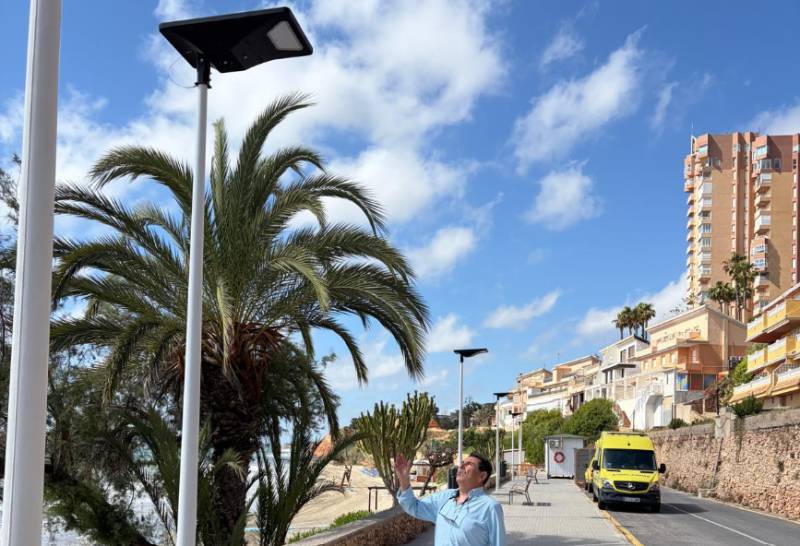
Beyond the environmental benefits, the council believes the project will make evening walks along the coast safer and more comfortable during the busy summer season.
Meanwhile, Orihuela Costa’s beaches themselves have once again received recognition for the standards they maintain throughout the year.
Five local beaches, La Glea, Mil Palmeras, Cala Estaca, Punta Prima and Cala Capitán, have been awarded prestigious Qualitur flags by the Valencian Regional Government. The awards recognise beaches that meet strict criteria covering everything from environmental protection and safety to accessibility, maintenance and customer service.
The distinction is often viewed as a quality seal for both residents and visitors, confirming that beaches are being managed to a consistently high standard rather than simply receiving a cosmetic clean-up before the summer rush. This year, only 206 beaches across the entire Valencian Community received the recognition.
Local officials have welcomed the awards as evidence that ongoing investment and maintenance efforts are paying off. They also highlight a broader challenge facing coastal destinations across Spain: maintaining high-quality tourist facilities while protecting the natural environment and ensuring local residents continue to benefit from the area they call home.
Andalucía
Similarly, (almost) all our Andalucía stories this week come from Almería. One of the week’s more sombre stories emerged from the province’s small fishing town of Garrucha, where a man’s body was recovered from the sea after being spotted floating face down near the Virgen del Carmen monument at the port. Emergency services were alerted early on Monday morning and the Guardia Civil quickly attended the scene.
The body was brought ashore at the commercial port, but authorities have so far released few details. The identity of the deceased has not been made public and investigators are now working to establish exactly what happened. As is standard in cases such as these, judicial protocols have been activated while the Guardia Civil examines the circumstances surrounding the death.
The incident came just days after another tragedy unfolded in Málaga province. A three-year-old British boy died after reportedly falling into a swimming pool at a rural holiday property in Periana, in the Axarquía area northeast of Málaga city.
Emergency services responded rapidly after receiving the call, dispatching medical teams, a helicopter and police officers to the scene. Despite their efforts, the child could not be saved.
According to local reports, the family had only arrived at the holiday accommodation the day before, making the loss all the more heartbreaking. Investigators have opened an inquiry into the incident, although there is currently no indication of any criminal involvement and early indications suggest it was a tragic accident.
The local community has rallied around the family, with Periana Town Hall issuing a statement of support and local officials personally visiting the parents to offer condolences.
So as not to finish on such a dour note, though, let’s turn our attention to the attractions that continue to draw visitors and new residents to the region.
Almería, in particular, has found itself in the spotlight after being highlighted by The Sun newspaper as one of Spain’s most appealing retirement destinations. In particular, five locations were singled out by the Soaraway gang as offering an attractive combination of sunshine, affordability and quality of life.

The list included inland favourites such as Albox and Cantoria, both long-established choices among foreign residents seeking lower property prices and a quieter pace of life. Turre also featured thanks to its position between the coast and the Almanzora Valley, offering easy access to beaches while retaining a more traditional atmosphere.
For those preferring urban living, Almería city also made the cut, recognised for offering many of the benefits of larger Mediterranean destinations while remaining comparatively affordable. The spectacular Cabo de Gata-Níjar Natural Park rounded out the selection, reflecting the growing appeal of less developed coastal areas where nature takes centre stage.
The recognition highlights a trend that has been gathering pace for years. While many overseas buyers once focused almost exclusively on the Costa del Sol or Costa Blanca, increasing numbers are discovering that Almería offers similar sunshine and lifestyle benefits, often at considerably lower cost.
And finally, as if to prove just how much is on offer here, Almería city will host celebrations for the International Yoga Day 2026 in the leafy surroundings of Nicolás Salmerón Park this weekend.
The event, which is taking place on Sunday, will feature yoga classes, guided meditation, devotional music, mantra chanting and vegetarian food, transforming one of the city’s most popular green spaces into a centre for relaxation and mindfulness.
Organisers from the Templo de Krishna described the event as a celebration of wellbeing, harmony and community, and the location itself could hardly be better suited, with the shaded park offering a welcome refuge from the intense summer heat that is already beginning to make itself felt across the province.
If you find yourself in the area, why not go along and give it a try?!

You may have missed…
- These are the small summer spending habits that quietly drain your wallet without you noticing.
Summer in Spain is wonderful. The long evenings, the warm nights, the terraces, the spontaneous plans. But it is also the time of year when our finances take a quiet battering, not from one big expense, but from dozens of small ones that barely register in the moment… - Imserso opens applications for 2026-27 budget holidays in Spain for retirees.
The application period has opened for Spain's hugely popular Imserso travel programme, giving pensioners and retirees the chance to enjoy heavily subsidised holidays across the country during the 2026-27 season. - Spain’s wildfire crisis is three times worse than this time last year, and the heat has barely begun!
With 39,000 hectares already burned and the first heat wave of summer approaching, experts warn the worst may still be ahead. - Five years of euthanasia in Spain: More people are choosing assisted dying, but the journey is rarely simple.
Five years ago, Spain became one of a small number of countries in the world to legalise euthanasia. Since then, 1,668 people have chosen to end their lives with medical assistance, and the figures suggest that number will keep growing. But behind every statistic lies a deeply personal story, and the data published this week by the Ministry of Health is a reminder of just how complex and human this issue remains. - A first for Spain as Calasparra’s famous cave gets full WiFi coverage.
The Cueva del Puerto in Calasparra has been recognised by the Region of Murcia as one of its tourism success stories, and it is now being used as a model for sustainable tourism thanks to new monitoring and safety systems.
That’s the end of this week’s Spanish News Today Editor’s Roundup Weekly Bulletin. Thank you for reading and we’ll see you again next week.
Bye!